Over 5,000 students at UT Austin are involved in Greek life and there are hundreds of student organizations on campus. There are social events happening every week where members are encouraged to bring dates, so students need a safe way to meet new people and make potential connections.

The primary customers of this matchmaking app are members of UT’s Greek Life, spirit organizations, and other student groups who frequently attend date events. However, it is open to all UT students.

Provide students personalized date matches based on key factors like shared interests, grade, or romantic intentions for those who want to meet people outside their current social circle but still share something in common.

For students who need last-minute dates for events but don't want to rely on blind dates or awkward setups, which can be stressful and hinder the overall enjoyment of the event. They want to meet new people and have a great experience.
Greek Life and Spirit Organization Members
Greek Life/Spirit Org Leaders and Event Coordinators
University Administration (e.g., Student Affairs)
App Developers and Designers
UT Students Not Involved in Greek Life or Spirit Orgs

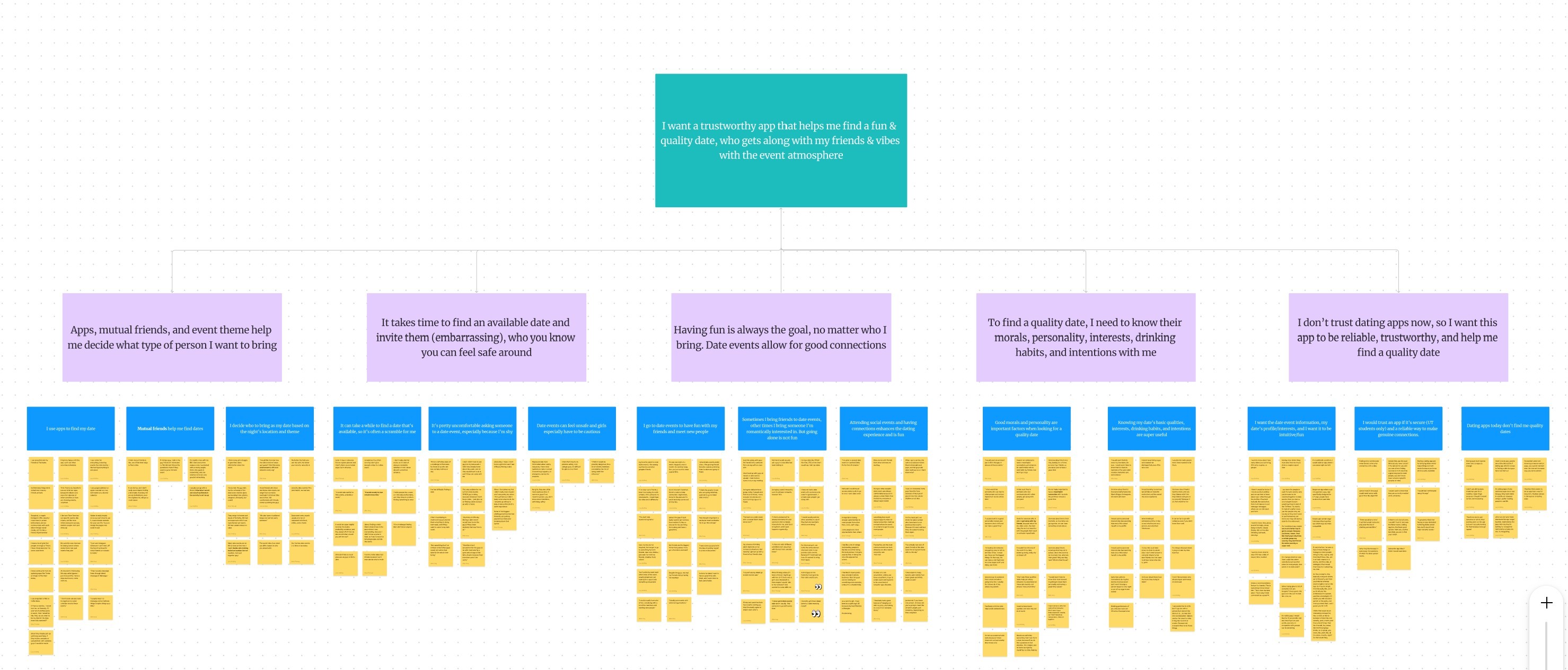
Affinity Diagram
We interviewed 8 people involved in Greek life and spirit orgs to understand their preferences.
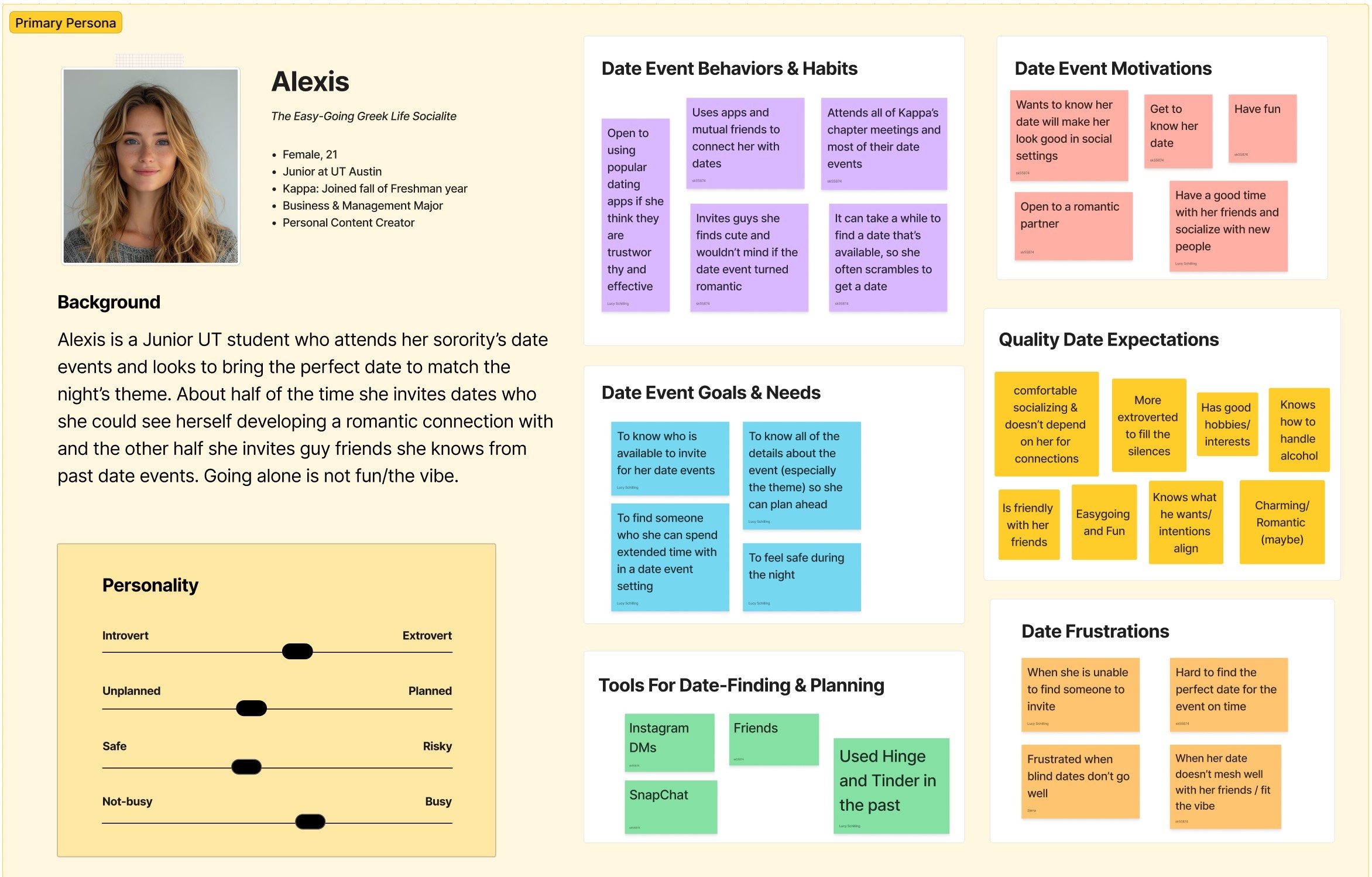
The stakeholders for the matchmaking app include Greek Life and Spirit Organization members, leaders and event coordinators, university administration, app developers, and non-Greek UT students.
Members want to find compatible dates, expand their networks, and avoid awkward pairings but will worry about compatibility, privacy, and time constraints. Leaders aim to boost event participation and foster inter-group relations, while worrying about engagement and the app’s alignment with chapter values. The university prioritizes safety and inclusivity, while developers focus on creating a seamless, scalable app. Non-Greek students may seek casual dating or friendships, and could worry about feeling excluded.
To involve stakeholders, surveys, beta testing, focus groups, and formal consultations will be essential, while progress can also be communicated through email, social media, and meetings. Understanding how each group prefers to communicate—casually for students and more formally for leaders and administrators—will shape how updates and designs are shared.
Visual mockups, user testimonials, and data-driven reports will help convey the design, ensuring it addresses convenience, compatibility, and safety across all groups.